What are Category 1, 2, and 3 water damage?
The IICRC S500 standard sorts water into three categories. Category 1 is clean water from a supply line, like a burst pipe feeding a sink. Category 2 is gray water with some contaminants, like washing machine discharge. Category 3 is black water, such as sewage backup or floodwater from outside, and it needs full protective handling. The category decides how the crew cleans, what gets removed, and what safety gear is used.
This page was reviewed and updated on November 4, 2026.
Category 1: clean water
This is water from a clean source that has not touched anything dirty yet. A burst supply pipe, an overflowing bathtub with clean water, a melting ice maker line. It looks harmless, and at first it is. But clean water does not stay clean. Left sitting in a warm room, it picks up contaminants from flooring, dust, and building material, and over a day or two it can degrade into Category 2. That is one more reason fast water removal matters: the clock is ticking on the category too.
Category 2: gray water
Gray water carries some contaminants. Washing machine and dishwasher discharge are the classic examples, along with toilet overflows where the water has urine but no solid waste. It can make people sick if swallowed, so crews wear more protection than with clean water, and porous materials like carpet padding usually cannot be saved. Gray water left standing also gets worse with time, sliding toward Category 3 as bacteria multiply.
Category 3: black water
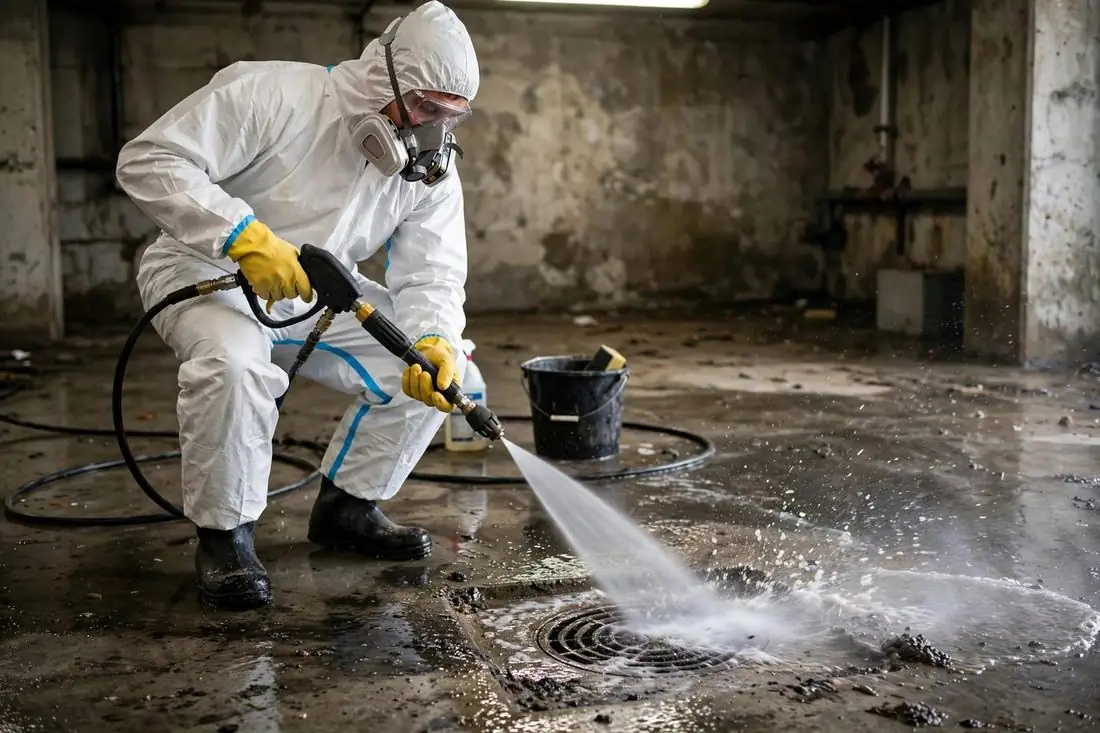
Black water is grossly contaminated. Sewage backups, toilet backflows carrying solid waste, and any floodwater that rose from outside ground level all count. This water can carry bacteria, viruses, and parasites. Crews handle it with full protective gear and containment, porous materials like carpet, padding, and soaked drywall are removed rather than cleaned, and everything left behind gets antimicrobial treatment. Our sewage backup cleanup page walks through exactly how that job runs.
Why the category matters to you
Three practical reasons. First, safety: you should not wade into Category 3 water, and you should not mop it up with household towels. Second, scope: the category decides what can be dried in place and what has to be torn out, which is the biggest driver of the job size. Third, your claim: the category shapes the documented scope of work, and adjusters understand these categories, so a proper category call protects your paperwork too.
More guides for Lacey homeowners
- Sewage Backup Cleanup in Lacey, WA
- Flood Cleanup in Lacey, WA
- How Long Does Water Damage Restoration Take?
- See all water damage services in Lacey, WA
Frequently Asked Questions
Need Help Now?
Call (360) 363-0413. We provide emergency response throughout Lacey and Thurston County.