
What happens to my belongings after water damage in my home?
Wet belongings are typically inventoried, moved out of the work area, cleaned or dried off site, stored, and returned after repairs. This process is often called a pack-out. Photograph everything before it moves, keep a copy of the inventory list, and ask how items are tracked so nothing gets lost between your home and storage.
This page was reviewed and updated on November 4, 2026.
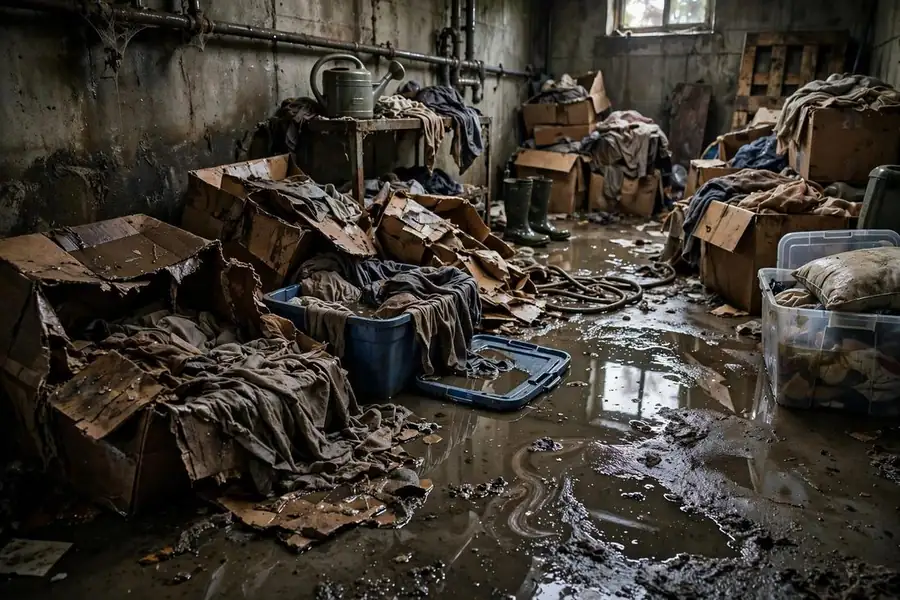
What a pack-out usually includes
It starts with an inventory: every item or box listed and photographed. Then careful packing, transport out of the wet area, and sorting. Hard goods like solid wood furniture and dishes are usually cleaned. Soft goods go through drying and specialized cleaning. Anything that cannot be made safe or clean, like a sewage soaked mattress, is documented for the claim instead of saved. Cleaned items go into storage until the home is repaired, then come back.
What you should do before the crew arrives
Walk every affected room with your phone and photograph everything where it sits, before anything moves. Make a quick list of valuables and sentimental items and point them out to the crew lead. Move small valuables like jewelry, documents, and electronics yourself if you safely can. And do not throw ruined items away yet: photograph them first, because the claim needs that proof. Our first hour guide covers these steps in order.
Cleaning versus replacing
Not everything can be saved, and an honest crew will tell you which is which. Solid wood, metal, glass, and ceramics usually clean up well. Particle board furniture that has swollen, soaked mattresses and pillows, and anything touched by sewage usually cannot be made safe again. The deciding factors are the water category, how saturated the item is, and what it is made of. When in doubt, the inventory photo plus the adjuster make the final call together.
How to keep track of it all
Ask for a copy of the inventory list before anything leaves your home, and keep it with your claim file. Ask how boxes are labeled and who your single contact person is for questions. When items return, check them against the list before you sign off. Good tracking is unglamorous and it is exactly what keeps a stressful process from becoming a lost property hunt.
More guides for Lacey homeowners
- Flood Cleanup in Lacey, WA
- Emergency Water Removal in Lacey, WA
- Water Damage Insurance Claim Process: Step by Step
- See all water damage services in Lacey, WA
Frequently Asked Questions
Need Help Now?
Call (360) 363-0413. We provide emergency response throughout Lacey and Thurston County.